China’s best battery suppliers are no longer judged by cell capacity alone. Buyers now examine the complete Battery Lifecycle And Sustainability Considerations, from mineral extraction to recycling. This shift reflects market scale. The International Energy Agency’s Global EV Outlook 2024 reported that electric-vehicle battery demand exceeded 750 GWh in 2023, rising by about 40% from the previous year. That growth makes resource efficiency urgent, not optional.
A credible supplier should provide measurable evidence. Factory energy data, recycled-material content, battery traceability, cycle-life testing, and transport records matter. So do practical details, such as stable cell temperature, documented quality checks, and clear end-of-life procedures. The Global Battery Alliance’s Battery Passport initiative also points toward stronger digital records for materials, emissions, and responsible production. These records can expose weak claims. They can also reveal improvement opportunities.
Professor Linda L. Gaines, a lifecycle-analysis expert at Argonne National Laboratory, stated, “Recycling is not the answer to all of our problems, but it is an important part of the solution.” Her point deserves attention. Recycling reduces pressure on primary materials, but it cannot repair poor design or unsafe manufacturing. Second-life applications may extend service, yet they require testing and reliable performance data. Some supplier sustainability pages still present broad promises without enough evidence. That is a weakness worth challenging. A careful comparison should therefore combine published reports, independent audits, technical samples, and supplier interviews. The strongest Chinese suppliers are those that can show progress across the entire battery journey, not merely attractive specifications at shipment.
Selecting a battery supplier in China requires more than comparing price, capacity, and delivery dates. The real question is whether the supply chain remains traceable from mineral inputs to end-of-life processing. The International Energy Agency reported that China produced over 80% of global battery cells in 2023. This concentration creates manufacturing advantages, but it also increases exposure to regional disruptions and changing regulations. Buyers should examine cell chemistry, factory location, production history, quality certifications, and documented energy sources.
Supplier audits should include practical evidence. Request batch-level material records, process-control data, safety test results, and waste-treatment permits. A factory visit can reveal details that spreadsheets hide, such as inconsistent labeling, crowded storage areas, or poor humidity control. BloombergNEF reported that average lithium-ion battery pack prices fell to 139 dollars per kilowatt-hour in 2023. Lower prices are attractive, but they can conceal weaker testing, unstable materials, or limited after-sales support. Not every low quote is efficient.
Lifecycle performance deserves equal attention. The IEA estimated global battery demand for electric vehicles reached about 750 gigawatt-hours in 2023, increasing pressure on minerals, electricity, and recycling systems. Ask suppliers for cycle-life data under realistic temperatures, not only laboratory conditions. Compare degradation after repeated charging, transport packaging, warranty response, and recycling partnerships. The selection process is still imperfect. Reported sustainability data may be incomplete, and supplier claims need independent verification before long-term contracts are signed.
Battery sustainability begins with design, not disposal. When assessing battery suppliers in China, buyers should examine cell architecture, expected cycle life, repair access, and end-of-life plans. A well-designed cell balances energy density, thermal stability, charging speed, and serviceability. Engineers also model performance under cold starts, high humidity, and repeated fast charging. Details matter.
Material selection shapes both reliability and environmental impact. Cathode chemistry affects mineral demand, cost, and safety behavior. Anode materials influence charging performance and long-term capacity retention. Aluminum, copper, separators, binders, and electrolytes also deserve traceable documentation. Recycled content can reduce pressure on raw materials, but it may introduce purity challenges. Data disappoints. A responsible supplier should provide test records, material declarations, and clear explanations of unresolved limitations.
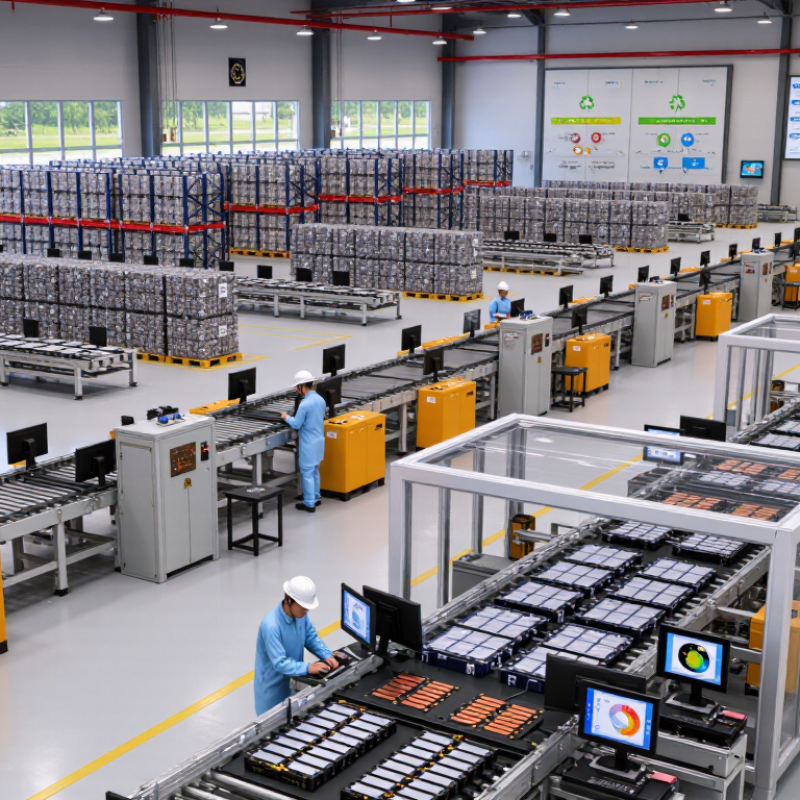
Manufacturing processes determine whether a strong design performs consistently. Electrode coating must maintain even thickness across large rolls. Dry-room humidity requires continuous monitoring because moisture can damage cell stability. Precise calendaring controls density, while formation cycling reveals early defects. Small defects matter. Automated inspection, statistical process control, and sampled destructive testing improve confidence. Factory energy use should be measured per kilowatt-hour produced, with renewable power reported separately from purchased offsets. Real production is rarely perfect, so reliable suppliers disclose yield losses, corrective actions, and field-return findings instead of presenting only ideal laboratory results.
| Lifecycle Stage | Key Dimension | Common Technical Data | Sustainability Relevance | Recommended Evaluation Indicator |
|---|---|---|---|---|
| Battery Design | Chemistry selection | Lithium iron phosphate (LFP) cells generally offer strong thermal stability and long cycle life; nickel-manganese-cobalt (NMC) cells generally provide higher gravimetric energy density. | Chemistry affects mineral demand, safety design, service life, recycling value, and total lifecycle emissions. | Cell chemistry, energy density, cycle-life rating, thermal-stability test results, and application suitability. |
| Battery Design | Cell format | Cylindrical, prismatic, and pouch formats are widely used. Prismatic and pouch designs can reduce inactive packaging materials, while cylindrical cells provide standardized production geometries. | Packaging efficiency influences material use, pack weight, cooling requirements, repairability, and end-of-life disassembly. | Active-material-to-pack ratio, structural material content, service access, and pack-level energy density. |
| Battery Design | Energy density | Commercial lithium-ion cell-level energy density commonly falls within approximately 150–300 Wh/kg, depending on chemistry, format, and design. | Higher energy density can reduce battery mass for a given range, but may increase thermal-management and safety-design requirements. | Cell-level and pack-level Wh/kg, usable energy, and energy-to-material ratio. |
| Battery Design | Cycle life | Cycle-life performance varies considerably by chemistry, depth of discharge, temperature, charge rate, and operating limits. LFP systems are often designed for high cycle durability. | Longer service life can reduce replacement frequency and distribute manufacturing impacts over more delivered energy. | Tested full-equivalent cycles to stated capacity retention, depth of discharge, and warranty conditions. |
| Materials | Cathode materials | Common cathode families include LFP and layered nickel-manganese-cobalt oxides. Cathode composition strongly affects energy density, cost, and critical-mineral exposure. | Reducing reliance on scarce or higher-impact minerals can improve supply resilience and environmental performance. | Material composition, mineral intensity per kWh, responsible sourcing controls, and recycled content. |
| Materials | Anode materials | Graphite is the dominant commercial anode material. Silicon-containing blends can increase theoretical capacity but require control of expansion and cycle degradation. | Anode selection affects resource demand, manufacturing yield, cycle life, and the feasibility of incorporating recycled materials. | Graphite or silicon content, source traceability, recycled fraction, and capacity-retention results. |
| Materials | Electrolyte and separator | Most conventional lithium-ion batteries use organic carbonate electrolytes with lithium salt and a porous polymer separator. | Electrolyte flammability and separator shutdown behavior influence safety, while solvent recovery and material handling affect environmental controls. | Electrolyte composition, leakage resistance, thermal shutdown performance, and hazardous-material management. |
| Materials | Critical-mineral sourcing | Lithium-ion supply chains may involve lithium, nickel, cobalt, manganese, copper, aluminum, graphite, and other processed materials. | Mining and refining can contribute to water use, land disturbance, emissions, and social risks; traceability supports responsible procurement. | Supplier due diligence, chain-of-custody records, origin documentation, and risk-mitigation audits. |
| Manufacturing | Electrode preparation | Typical steps include powder mixing, slurry preparation, coating onto metal foil, drying, calendaring, slitting, and vacuum drying. | Drying and solvent recovery can be significant energy and environmental-control requirements in cell production. | Production energy per kWh, solvent-recovery rate, coating yield, scrap rate, and renewable-electricity share. |
| Manufacturing | Cell assembly | Assembly includes stacking or winding electrodes, inserting separators, welding current collectors, electrolyte filling, sealing, and formation. | High process yield reduces material waste and the embedded emissions associated with defective cells. | First-pass yield, defect rate, dry-room energy use, electrolyte loss, and manufacturing scrap recovery. |
| Manufacturing | Formation and aging | Formation applies controlled charge and discharge cycles to activate the cell; aging and testing verify electrical and safety performance. | Formation can consume substantial electricity and time, making process efficiency and energy recovery important. | Formation energy per kWh, testing duration, recovered energy percentage, and capacity-screening accuracy. |
| Manufacturing | Pack integration | Pack production adds modules or cell-to-pack structures, battery-management systems, cooling components, enclosure materials, fuses, and sensors. | Pack architecture affects repairability, thermal control, material intensity, transport weight, and end-of-life disassembly. | Pack-to-cell weight ratio, modularity, component replaceability, thermal uniformity, and disassembly time. |
| Use Phase | Operating temperature | Battery performance and aging are temperature-dependent. Extreme heat accelerates degradation, while low temperatures reduce available power and charging performance. | Effective thermal management can extend service life and reduce premature replacement. | Operating-temperature window, cooling energy, thermal uniformity, and charging restrictions at low temperature. |
| Use Phase | Charging efficiency | Round-trip efficiency depends on chemistry, charging rate, temperature, battery-management settings, and power-conversion equipment. | Higher efficiency reduces electricity losses over the battery’s operating life. | AC-to-DC efficiency, DC round-trip efficiency, charging losses, and delivered energy over service life. |
| Use Phase | Second-life potential | Retired vehicle batteries may retain usable capacity for stationary storage, subject to safety screening, remaining life, and economic feasibility. | Reuse can defer recycling and extend the useful life of battery materials before final recovery. | State of health, diagnostic accuracy, repurposing cost, safety certification, and expected second-life duration. |
| End of Life | Collection and transport | Damaged or end-of-life lithium-ion batteries require controlled handling, electrical isolation, packaging, and transport procedures. | Proper logistics reduce fire risk, leakage risk, and loss of recoverable materials. | Collection rate, incident rate, state-of-charge control, compliant packaging, and traceable transport records. |
| End of Life | Recycling routes | Mechanical separation, pyrometallurgical processing, and hydrometallurgical processing are established recycling approaches, often used in combination. | Recycling can recover valuable metals and reduce demand for some primary raw materials, although recovery performance varies by process and chemistry. | Recovery rate by material, energy use per tonne, reagent consumption, emissions controls, and recycled-product quality. |
| End of Life | Design for disassembly | Accessible fasteners, clear labeling, standardized interfaces, replaceable components, and documented pack architecture can simplify dismantling. | Design choices improve repair, reuse, sorting, worker safety, and recovery of materials at end of life. | Disassembly time, number of unique fasteners, adhesive dependence, module replaceability, and material labeling. |
| Lifecycle Assessment | Carbon footprint | Battery carbon intensity varies with chemistry, material sourcing, electricity mix, production yield, pack design, transport, and service life. | A lifecycle assessment should cover raw-material extraction, refining, cell and pack production, use, transport, reuse, and recycling. | kg CO2e per kWh at factory gate and across the full lifecycle, with clearly stated system boundaries. |
| Lifecycle Assessment | Environmental reporting | Comparable reporting requires defined functional units, data boundaries, allocation rules, assumptions, and verification procedures. | Consistent methodology prevents misleading comparisons between battery technologies or manufacturing sites. | Third-party verification, primary production data, uncertainty range, system boundary, and update frequency. |
| Supplier Assessment | Quality and sustainability governance | Robust supplier systems typically combine process control, incoming-material verification, worker-safety programs, environmental permits, and corrective-action management. | Governance reduces quality failures, resource waste, environmental incidents, and social-compliance risks. | Quality certifications, environmental-management systems, occupational-safety indicators, audit closure rate, and public sustainability disclosures. |
Battery supplier selection should begin with documented quality systems, not attractive price sheets. ISO 9001 supports process control, while IEC 62619 addresses safety for industrial lithium batteries. UN 38.3 testing also checks transport risks, including vibration, impact, and temperature changes. In practice, buyers should request traceability records for cells, electrodes, electrolyte batches, and production dates. A missing serial link can make a recall slow and expensive.
Performance evaluation needs measurable evidence. The International Energy Agency reported that electric vehicle battery demand exceeded 750 GWh in 2023. This scale increases pressure on cycle life, charging stability, and thermal control. Suppliers should provide capacity-retention data after defined cycle counts, not only laboratory peak capacity. Independent testing should measure energy density, internal resistance, power output, and degradation at different temperatures. Small temperature differences matter. A battery performing well at 25°C may lose capacity quickly at 0°C.
Safety reviews should include abuse testing, thermal propagation analysis, and factory process audits. The Global Battery Alliance’s Battery Passport work also emphasizes carbon, material sourcing, and lifecycle transparency. Sustainability claims remain uneven. Some supplier reports exclude upstream emissions or recycling losses, which weakens comparisons. No audit is perfect. Buyers should challenge unclear assumptions, repeat sample tests, and record failures instead of hiding them. A realistic lifecycle assessment includes manufacturing energy, transport, field replacement, and end-of-life recovery. This approach supports safer purchasing decisions and more credible supplier evaluation.
China Best Battery Suppliers Lifecycle And Sustainability
Battery Lifecycle Management from Use to Recycling
For buyers sourcing batteries from China, lifecycle management should start before shipment. A responsible supplier records cell origin, production dates, test results, and pack configuration. Digital traceability helps technicians match a returned pack with its manufacturing history. In practice, the first useful document is not a brochure. It is a clear service file. It should include charging limits, storage temperature, inspection intervals, and warranty evidence. Operators also need training. A damaged enclosure, unusual swelling, or rising internal resistance requires controlled isolation and qualified assessment.
During use, battery management software tracks state of charge, state of health, temperature, voltage balance, and fault codes. These values reveal gradual decline before performance becomes unsafe. Maintenance teams can compare monthly data, inspect connectors, and verify cooling paths. Small details matter. Dust matters. Incorrect storage can shorten service life, especially in hot warehouses. Suppliers should provide realistic cycle-life data under stated load, temperature, and depth-of-discharge conditions. Marketing figures without test conditions deserve caution.
When a pack no longer suits its original equipment, qualified technicians can test capacity, insulation, and mechanical condition for possible second-life use. Not every pack deserves reuse. Some should move directly to authorized recycling channels, with transport and documentation handled according to local requirements. Recycling can recover valuable materials, but recovery rates vary by chemistry and process. No lifecycle plan is perfect. Data may be incomplete, and early assumptions can age badly. Regular audits, incident reviews, and supplier feedback keep the process honest and improve the next purchasing decision.
China’s battery supply chain is moving from production speed toward measurable sustainability. Leading suppliers now track energy use, water consumption, material sources, and emissions across each lifecycle stage. Factory teams may monitor electricity meters hourly and inspect wastewater before discharge. These details matter because sustainability claims require evidence, not attractive statements.
Recycling is becoming a central industry practice. Battery producers are designing packs that can be opened, tested, and separated more easily. Recovered metals can reduce pressure on new mining, although recycling still requires energy and careful process control. Independent audits, traceable records, and worker safety checks improve reliability. In practice, data quality remains uneven. Some suppliers report factory emissions clearly but provide limited information about upstream materials.
Future trends will likely include lower-carbon manufacturing, digital product passports, and stronger battery collection networks. Software may record a battery’s temperature history, repair events, and remaining capacity. This information can support safer second-life applications in storage systems. Renewable electricity will also become more important, especially for energy-intensive cell production. Yet progress will not be automatic. A factory can install solar panels while retaining inefficient equipment and high material waste.
Suppliers with strong technical teams will test improvements through lifecycle assessments rather than relying on isolated achievements. Customers should examine recycling rates, audit scope, energy sources, and warranty data. Small design changes can have large effects. A simpler casing, fewer mixed materials, and safer dismantling instructions may improve recovery years later. The industry still needs clearer reporting rules and more consistent measurement across regions.
The chart shows the minimum recycled-content targets established by the European Union Battery Regulation for batteries placed on the market. By 2031, new batteries must contain at least 16% recycled cobalt, 6% recycled lithium, and 6% recycled nickel; by 2036, these targets rise to 26%, 12%, and 15%. These requirements reflect the industry's shift toward closed-loop material recovery, traceable supply chains, and lower lifecycle environmental impacts.
Source: Regulation (EU) 2023/1542 concerning batteries and waste batteries, recycled-content requirements in Article 8.
Request quality certificates, production records, test reports, and traceability documents. Each cell should link to its materials, batch, and production date. Missing links create recall delays. That risk is easy to underestimate.
Ask for capacity retention after specific cycle counts. Do not rely only on peak laboratory capacity. Independent tests should measure energy density, resistance, power, and degradation. Real use is messier.
Temperature changes can reduce capacity and charging stability. A battery may perform well at 25°C but weaken at 0°C. Test several temperatures. Small differences matter.
Require abuse testing, thermal propagation analysis, and factory process audits. Transport testing should include vibration, impact, and temperature changes. Review emergency procedures and failure records. Hidden failures are dangerous.
Examine energy use, water consumption, material sources, emissions, and recycling data. Check whether reports include upstream materials and transport. Some reports leave gaps. That weakens comparisons.
Include manufacturing energy, transport, field replacement, and end-of-life recovery. Measure the full battery journey, not one attractive factory result. Solar panels alone prove little. Waste may remain high.
Recycling can recover metals and reduce pressure on new mining. However, recycling consumes energy and requires careful process control. Packs should be easier to open, test, and separate. Design affects recovery years later.
It may record temperature history, repairs, remaining capacity, and replacement events. This data can support safer second-life storage applications. Records can also reveal poor maintenance. The system is not perfect.
China’s battery industry offers a broad and increasingly organized supply chain, making supplier selection a critical step for businesses seeking reliable performance, stable production, and responsible sourcing. This overview explains how battery design, material selection, cell assembly, testing, and manufacturing processes influence efficiency, durability, and cost. It also highlights the importance of quality standards, safety controls, and performance evaluation, including capacity, cycle life, thermal stability, and consistency. Careful assessment of production capabilities and documentation can help buyers choose suitable suppliers for different applications.
Battery Lifecycle And Sustainability Considerations are essential from initial use through maintenance, second-life applications, and recycling. Effective lifecycle management can extend battery service life, improve resource efficiency, and reduce environmental impact. The article also discusses sustainability practices such as responsible material sourcing, energy-efficient manufacturing, waste reduction, and improved recovery processes. Looking ahead, advances in energy storage technology, intelligent monitoring, circular supply chains, and stricter environmental expectations are likely to shape the future development of China’s battery industry.

UX Power