2026 Top Energy Storage Systems for Smart Cities

Time:2026-10-02 Author:Oliver
0%

Cities are becoming more electric, connected, and vulnerable to power disruptions. Energy Storage For Smart Cities Development is therefore moving beyond backup power. It now supports transit networks, data centers, hospitals, electric buses, and neighborhood microgrids.

The International Energy Agency reported that global battery storage additions reached about 42 gigawatts in 2023, nearly doubling within one year. Its Net Zero Roadmap also indicates that global energy storage capacity must expand substantially by 2030. BloombergNEF’s Energy Storage System Cost Survey shows that falling battery costs are improving project economics, although land, permitting, and grid-connection delays remain serious obstacles. Numbers help, but they do not solve every street-level problem.

In a dense district, a storage system can charge during low-demand hours and discharge when elevators, cooling systems, and fast chargers peak. That simple cycle can reduce grid stress and protect essential services. Dr. Imre Gyuk, a leading U.S. Department of Energy energy-storage expert, stated, “Energy storage is the key to making renewable energy reliable.” His observation remains highly relevant for urban planning.

This article examines leading energy storage systems for smart cities in 2026. It compares lithium-ion batteries, long-duration storage, thermal systems, and second-life battery applications. The analysis considers efficiency, safety, lifecycle cost, cybersecurity, and resilience. Some forecasts may prove too optimistic. Cities should test systems locally, measure real performance, and avoid treating storage as a universal answer. A smart city needs smarter judgment.
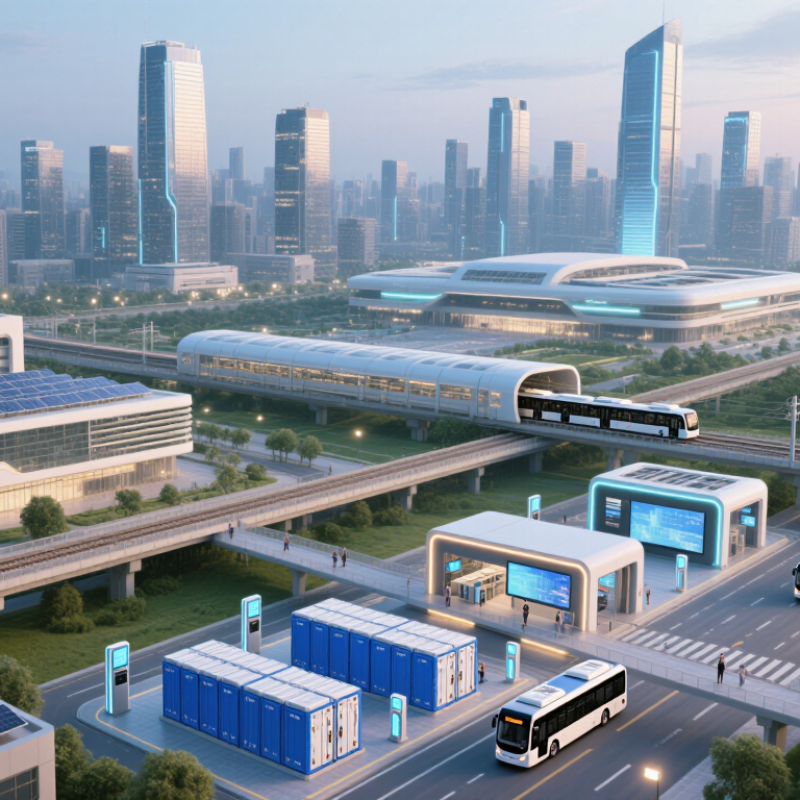
2026 Top Energy Storage Systems for Smart Cities

Energy Storage Systems: Definition, Purpose, and Role in Smart Cities

Energy storage systems are technologies that capture electricity for later use. They include lithium-ion batteries, flow batteries, thermal storage, and pumped hydro. In smart cities, they balance supply and demand. They also support solar power after sunset.

The IEA’s Batteries and Secure Energy Transitions report (2024) says global energy storage capacity must grow sixfold by 2030. Battery storage may provide about 1,200 GW of that 1,500 GW requirement. This growth matters when electric buses charge, elevators operate, and homes need power during outages. Storage can reduce peak demand, stabilize local grids, and delay expensive network upgrades. Yet storage is not a magic solution. Poor forecasting can leave batteries underused, while heat, humidity, and cycling can reduce performance. That part deserves more attention.

Tips: Match storage duration with the city’s real load profile. Use short-duration batteries for peak shaving. Consider thermal storage for district cooling. Track round-trip efficiency, response time, safety controls, and end-of-life plans. The U.S. Department of Energy’s Long Duration Storage research highlights the need for technologies beyond four-hour discharge periods. City planners should also test emergency scenarios, not only average days. Small operational mistakes can become expensive.

Core Technologies Used in 2026 Urban Energy Storage

Urban energy storage in 2026 depends on several connected technologies, not one oversized battery. Lithium iron phosphate cells remain practical for daily cycling and dense installations. Sodium-ion systems can support lower-cost projects where space and weight are less restrictive. Flow batteries may suit longer-duration storage, although their larger footprints challenge crowded districts.

Grid balance matters.

Bidirectional inverters move electricity between batteries, buildings, and local networks. Modern battery management systems monitor voltage, temperature, and cell aging continuously. Thermal controls can reduce stress during summer peaks. A quiet cabinet beside an apartment block is not a small engineering achievement.

Energy management software adds another layer.

It combines weather data, traffic patterns, building demand, and electricity prices. Forecasts still fail. A sudden heatwave can disrupt even a carefully trained model. Therefore, operators need manual controls, clear alarms, and tested fallback modes. Cybersecurity also matters because connected storage can affect essential urban services.

Some systems pair batteries with solar canopies, electric buses, and wastewater facilities. Their performance depends on reliable communication protocols and independent safety testing. Fire detection, ventilation, and physical separation require careful site design.

One overlooked issue is noise. Residents may accept clean power less readily when cooling fans run beside bedrooms. Real projects still need better recycling plans, transparent maintenance records, and honest reporting about capacity loss over time.

Key Performance Metrics for Comparing Energy Storage Systems

2026 Top Energy Storage Systems for Smart Cities

Key Performance Metrics for Comparing Energy Storage Systems

Smart-city storage is not judged by capacity alone. A 10 MWh system may fail if it cannot deliver power during evening demand peaks. Compare usable energy, continuous power, and duration under real operating conditions. A clear test profile matters.

Round-trip efficiency shows how much electricity returns after charging. Measure it at expected temperatures, load levels, and auxiliary consumption. Response time matters for frequency control and voltage support. Milliseconds can influence grid stability. Cycle life should include the allowed depth of discharge. Degradation estimates are equally important. They reveal how performance may change after five or ten years.

Safety metrics deserve equal attention. Review thermal monitoring, fault isolation, fire detection, and emergency access. Site availability should include planned maintenance and unexpected outages. Cost comparisons should use levelized cost of storage, not purchase price alone. Include installation, software, replacement parts, and recycling. A perfect scorecard does not exist. Weather, tariffs, and local load patterns can change the result. Independent test data is more reliable than optimistic specifications. Operators should also examine cybersecurity controls and communication delays. Small delays can become expensive during a crowded peak. A practical comparison records every assumption, even the inconvenient ones.

2026 Top Energy Storage Systems for Smart Cities - Key Performance Metrics for Comparing Energy Storage Systems
Storage System Typical Duration Round-Trip Efficiency Response Time Typical Cycle Life Calendar Life Power Capability Safety and Siting Profile Best Smart-City Applications
Lithium-Ion LFP Battery 0.5–4 hours 85–95% Milliseconds to seconds Approximately 6,000–12,000 cycles 10–20 years, depending on temperature and operating conditions High; suitable for frequency regulation, peak shaving, and backup power Non-flammable cathode chemistry compared with many alternatives, but thermal-runaway protection, spacing, ventilation, monitoring, and fire-suppression systems are still required Solar and wind integration, electric-vehicle charging hubs, microgrids, data centers, critical facilities, and distribution-grid support
Lithium-Ion NMC Battery 0.5–4 hours 88–96% Milliseconds to seconds Approximately 2,000–6,000 cycles 8–15 years, depending on depth of discharge and temperature Very high; strong power-to-energy performance Requires robust battery-management systems, thermal monitoring, separation distances, and emergency-response planning Space-constrained urban sites, fast-response grid services, high-power charging, and short-duration resilience applications
Sodium-Ion Battery 1–6 hours 85–92% Milliseconds to seconds Approximately 3,000–8,000 cycles 10–15 years, subject to operating conditions Medium to high; suitable for stationary and moderate-power applications Uses more abundant sodium-based materials; system-level fire protection and thermal management remain necessary Community energy storage, cold-climate projects, renewable smoothing, public charging infrastructure, and cost-sensitive stationary storage
Vanadium Redox Flow Battery 4–12 hours or longer 70–85% Seconds to minutes Approximately 10,000–20,000+ cycles 20–30 years with periodic maintenance Moderate; energy capacity can be increased by enlarging the electrolyte tanks Low fire risk because the electrolyte is aqueous and generally non-flammable; requires tanks, pumps, containment, and more physical space Long-duration renewable integration, community microgrids, utility substations, and repeated daily cycling
Pumped-Storage Hydropower 8–24+ hours 70–85% Seconds to minutes 10,000–20,000+ cycles over the plant life 50–100 years with refurbishment Very high; well suited to bulk energy shifting and system balancing Low operational fire risk, but requires suitable topography, significant civil works, water management, and environmental permitting Metropolitan or regional grid balancing, renewable firming, black-start support, and large-scale resilience
Compressed-Air Energy Storage 4–24+ hours 40–70% Minutes Several thousand cycles 30–50+ years, depending on plant design High; suitable for large-scale energy shifting Low battery-fire risk, but requires suitable underground formations or engineered vessels, rotating equipment, and pressure-management systems Large renewable-energy hubs, regional capacity support, long-duration storage, and transmission-constrained areas
Thermal Energy Storage 2–24+ hours Not directly comparable to electrical storage; thermal discharge efficiency commonly ranges from 70–95% Seconds to minutes Approximately 5,000–20,000+ cycles, depending on the medium and operating temperature 15–30+ years High for heating and cooling loads; electrical output requires an additional conversion system Generally low electrical fire risk; requires insulation, pressure control, heat-transfer equipment, and suitable space District heating and cooling, chilled-water storage, building-load shifting, industrial heat, and reduction of urban peak demand
Flywheel Energy Storage Seconds to 30 minutes 80–95% Milliseconds Hundreds of thousands to millions of shallow cycles 15–25 years Very high power, but limited energy duration Low chemical fire risk; requires a strong containment vessel, vacuum system, vibration control, and specialized installation Frequency regulation, voltage stabilization, power-quality control, transit systems, and short-duration backup for critical loads
Data note: Values are representative technology ranges reported for commercial and demonstration-scale systems. Actual performance depends on system architecture, ambient temperature, depth of discharge, charging rate, maintenance practices, grid-interconnection limits, and project design. Round-trip efficiency excludes site-specific transformer and auxiliary losses unless stated otherwise.

Applications of Energy Storage in Smart City Infrastructure

2026 Top Energy Storage Systems for Smart Cities

Energy storage is becoming a practical layer in smart city infrastructure. Battery systems can support hospitals, transit stations, water plants, and emergency shelters during grid interruptions. They store solar power during midday, then release electricity when evening demand rises. This reduces pressure on transformers and improves local energy flexibility.

Thermal storage also has an important role. Chilled water tanks can cool public buildings after sunset, when electricity prices may decrease. In transit networks, recovered braking energy can support nearby stations or lighting systems. Community-scale storage can balance apartment blocks, schools, and electric vehicle charging areas. From project experience, the strongest results come from matching storage capacity to actual load patterns. Larger systems are not automatically better. A poorly sized system may remain underused, while maintenance costs continue. That is an uncomfortable detail.

Tips: Measure hourly demand first. Include backup controls. Test island operation regularly. Keep fire access clear. Review performance after extreme weather.

City planners should connect storage systems with forecasting software, smart meters, and flexible building controls. These tools help operators respond to heatwaves, storms, and sudden demand changes. Safety planning must cover ventilation, thermal management, cybersecurity, and trained maintenance teams. Regulations and technical standards also differ by location, so independent engineering reviews remain essential. Storage should not be treated as a single device. It is an operational service linked to buildings, transport, public health, and daily habits. Mistakes will happen, but transparent monitoring makes them easier to detect and correct.

Selection Criteria for Safe, Scalable, and Sustainable Systems

Smart cities need storage that survives traffic, heat, outages, and changing electricity prices. Selection should begin with safety, not capacity. The International Energy Agency’s Batteries and Secure Energy Transitions report points to a massive expansion. Its net-zero pathway requires roughly 1,200 GW of battery storage by 2030, compared with about 86 GW in 2023. This is not a distant planning issue. City tenders should demand documented thermal-runaway testing, fire separation, gas detection, drainage, and emergency access.

Use recognized frameworks, including IEC 62933 and NFPA 855, where applicable. Independent commissioning should verify alarms, isolation systems, ventilation, and emergency procedures. Real sites are less tidy. Heat waves, flooded rooms, and poorly trained contractors can defeat elegant specifications. Local fire-service capability deserves equal attention, even when it complicates the schedule.

Scalability means more than adding containers. Check modular expansion, compatible inverters, open data interfaces, degradation guarantees, and cybersecurity controls. Sustainability requires lifecycle evidence, not attractive recycling promises. IRENA’s Renewable Power Generation Costs in 2023 reported an 89% decline in battery storage project costs between 2010 and 2023. Lower cost is valuable, but cheaper systems may hide replacement, cooling, or disposal expenses. Compare round-trip efficiency, embodied carbon, expected cycles, and end-of-life recovery plans. An honest selection process also records uncertainty. No spreadsheet captures every neighborhood constraint.

2026 Top Energy Storage Systems for Smart Cities

Selection criteria for safe, scalable, and sustainable systems

The chart compares representative planning benchmarks for widely used energy-storage technologies. Round-trip efficiency is shown as a percentage, while cycle life is shown in thousands of cycles. Values are typical engineering ranges summarized as indicative midpoints; actual performance varies with system design, operating temperature, depth of discharge, and project configuration. Hover over each bar to view indicative response time.

FAQS

What is an energy storage system?

It captures electricity and releases it later. Common options include batteries, thermal storage, and pumped hydro. Think of stored power as water in a tank.

Why do smart cities need energy storage?

Storage balances supply and demand during busy periods. It can support electric buses, elevators, homes, and local services during outages. Peak demand can fall.

Can storage support solar power after sunset?

Yes. Batteries can store daytime solar electricity for evening lighting and building use. However, cloudy weather may reduce the available charge.

Which storage technology suits daily urban cycling?

Lithium iron phosphate batteries can suit frequent daily charging. Sodium-ion systems may work where space and weight matter less. The best choice depends on actual city needs.

When are longer-duration systems useful?

Longer-duration storage can support demand beyond four hours. Flow batteries may help, but their larger footprint can challenge crowded districts. Bigger is not always better.

How do operators keep storage systems reliable?

Battery management systems monitor voltage, temperature, and aging. Thermal controls reduce summer stress. Operators also need manual controls and tested backup modes.

What safety issues should cities consider?

Sites need fire detection, ventilation, physical separation, and independent safety testing. Operators should test emergency scenarios, not only normal days. Small mistakes become expensive.

Can connected storage create new urban problems?

Yes. Weak cybersecurity can affect essential services. Cooling fans may also create noise beside apartment bedrooms. Clean power still needs considerate site design.

How should cities measure storage performance?

Track round-trip efficiency, response time, capacity loss, safety events, and maintenance records. End-of-life plans matter too. Recycling remains an unfinished task.

Conclusion

Energy Storage For Smart Cities Development is becoming essential for building reliable, flexible, and low-carbon urban energy networks in 2026. Energy storage systems capture electricity when supply is abundant and release it when demand rises, helping cities balance renewable generation, reduce peak pressure, improve grid resilience, and maintain essential services during disruptions. This article explains the role of storage in smart city planning and introduces key technologies, including lithium-based batteries, flow batteries, thermal storage, hydrogen-based systems, and mechanical solutions.

It also examines important performance metrics such as energy capacity, power output, response time, round-trip efficiency, operating life, safety, cost, and environmental impact. Practical applications include public transportation, data centers, buildings, microgrids, emergency facilities, and renewable energy integration. Finally, the article presents selection criteria for choosing systems that are safe, scalable, financially practical, recyclable, and adaptable to future urban energy needs.

Oliver

Oliver

Oliver is a seasoned marketing professional with a wealth of expertise in driving brand awareness and engagement. With a deep understanding of our company's product offerings, he consistently delivers high-quality content that enriches our professional blog. His insights not only shed light on......